
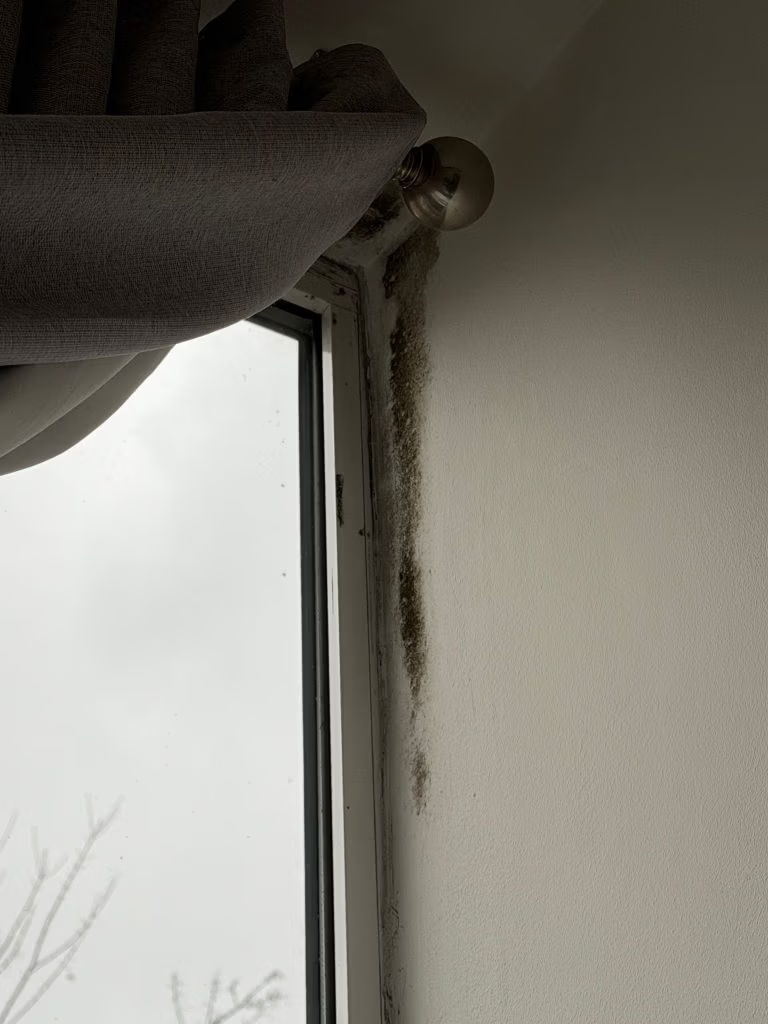
Mould: A Critical Indicator of Deeper Property Issues
Mould growth is not just a surface-level problem; it is a crucial symptom indicating a significant moisture imbalance, excess water, or an active leak within a property’s structure. For prospective UK homeowners, encountering mould should raise immediate concern. While some moisture issues are straightforward to resolve, the underlying cause can stem from complex structural problems, including poor construction. A situation sometimes observed in newer builds or extensively modified older homes.
Damp and mould are regrettably common issues across the UK, a fact attributed to the country’s temperate, wet climate, the age profile of its housing stock, and, occasionally, inadequate or substandard building and retrofitting practices. The good news is that most mould issues are manageable, often requiring solutions focused on improved background and mechanical ventilation alongside better thermal performance. However, these necessary remedies can sometimes be significant and costly.
This guide expands on the common origins of mould growth, explains why diagnosing the root cause can be complex, and outlines the essential investigation steps a homebuyer must take. (For detailed preventative measures and remedial steps, refer to our related article: [Insert Link to Preventative Measures Article Here]).Understanding the Health Risks of Damp and Mould
Before proceeding with any purchase, buyers must be aware of the tangible health risks associated with exposure to damp and mould, as clearly outlined by official UK GOV/DHSC guidance:
- Increased Respiratory Issues: Mould spores can exacerbate or cause respiratory problems, including asthma.
- Allergies and Immune Reactions: Exposure is a common trigger for allergies and can affect the immune system, with infants, the elderly, and individuals with pre-existing conditions being particularly vulnerable.
The Two Main Drivers of Mould Growth
Mould formation typically results from one of two primary failures in the building’s ability to manage moisture:
- Condensation: Damp and mould, particularly condensation-related issues, typically arise from several interacting factors:
- High indoor moisture generation without sufficient ventilation: Everyday activities significantly increase the humidity inside a home. A family of four can easily produce 10-15 litres of water vapour per day through cooking, bathing, breathing, and especially drying clothes indoors.
- Cold surfaces (Thermal Discontinuities): These “cold spots” are usually found in areas where insulation is poor or interrupted, such as around single-glazed windows, corners, behind furniture pushed against exterior walls, or at ‘thermal bridges’ (e.g., where a concrete floor slab meets an exterior wall). The surface temperature in these areas drops significantly lower than the air temperature.
- “Breathe-ability”: Historically, older UK homes (pre-1970s) were built with breathable materials and natural air leakage, allowing excess moisture to escape. Modern attempts to save energy often involve adding insulation, sealing drafts, and fitting double glazing without simultaneously upgrading ventilation. This traps the internally generated moisture, leading to extremely high internal relative humidity (RH).
- A more insidious problem is interstitial condensation, where moisture condenses within the building fabric. This often results from poor detailing, inadequate insulation, or a lack of understanding of building pathology, frequently following years of disruptive alterations or ‘poor-quality retrofit’ work.
- When the trapped, high-RH air hits a cold spot, condensation forms. If this condition persists, the constant dampness allows common household mould (often Aspergillus or Penicillium species) to proliferate, feeding on organic materials like dust, wallpaper, or plasterboard. This is fundamentally a ventilation issue. To identify the root cause, a thorough analysis is necessary to determine the mechanism by which moisture is generated and travels through the property.
- Water Ingress or Active/Historical Leaks: This involves external water penetrating the structure. Causes include defective rainwater goods (gutters and downpipes), active leaks from plumbing, or historical leaks (such as a roof leak) that were never properly dried out, leaving residual dampness within the materials.
Investigating the Cause: Essential Steps for a Buyer
To accurately identify, cost, and ultimately address the problem, a comprehensive, non-invasive investigation is paramount before finalising any purchase decision.
Choosing the Right Specialist for Due Diligence
The most critical step is engaging the right professional:
- Demand Independence: It is vital to hire an independent damp and mould specialist or a surveyor who is not affiliated with any damp proofing, ventilation, or repair company. Companies offering ‘free surveys’ often operate with a commercial interest in selling expensive, and sometimes unnecessary, remedial works.
- Insist on a Whole-House Approach: The specialist must take a whole-house approach, thoroughly understanding the building’s specific structure, its ‘pathology,’ and critically, how moisture is generated, contained, and travels within and through the fabric. Look for accreditation from bodies like the Property Care Association (PCA) or IICRC.
What a Comprehensive Specialist Report Must Cover
A credible report should be easy to understand and provide a clear basis for negotiation and decision-making. It must thoroughly detail three key areas:
- The extent and severity of the mould growth.
- The definitive root cause and associated structural or ventilation risk factors.
- Recommended remedial options and necessary restorative works.
The specialist must substantiate their findings using appropriate, objective data, which should be included in the report. Here’s a non-exhaustive list:
- Moisture meter readings (identifying affected areas and levels).
- Hygrometer data (measuring ambient temperature and relative humidity).
- Thermal imaging (locating cold spots and areas of thermal bridging/discontinuity).
- Detailed photographic evidence.
Once you have this detailed assessment, you must obtain quotes from at least three different, independent, and reputable remedial companies. This information is crucial for accurately costing the repair work, which is essential for deciding whether to proceed with the purchase or renegotiate the house price to reflect the required investment.
How We Can Help: Your Independent Partner
We pride ourselves on being an honest, ethical, and 100% independent company. Unlike many ‘surveyors’ tied to large remedial contractors, our sole allegiance is to you, the buyer.
We offer an independent due diligence service focused exclusively on providing an unbiased assessment of the property’s moisture and mould issues. We deliver clear, detailed reports, backed by scientific data, that precisely pinpoint the root cause, quantify the associated risks, and provide a roadmap for remedial action—information you can trust to make an informed decision and negotiate effectively.
Contact us now for a mould investigation by a PCA or IICRC-registered surveyor who works for you, not a repair company.
Disclaimer
This article provides general guidance only and should not replace professional surveying advice. Always consult qualified specialists (CSRT-qualified damp surveyors, PCA members, or RICS surveyors) for property-specific recommendations.
The cost estimates provided are typical ranges (excluding VAT) as of October 2025 but vary significantly by region, property type, and scope of works. Always obtain written quotes for your specific circumstances.
We are not liable for decisions made based on this information. Property purchase is a significant financial commitment – seek independent professional advice appropriate to your situation