

Exchanging contracts is the point where a house purchase becomes legally binding. Once you exchange, pulling out usually means losing your deposit, even if serious issues emerge later.
This pre-exchange checklist sets out what to do before exchanging contracts when buying a house in England. It covers surveys, legal documents, searches, and final checks and highlights where buyers most often misjudge risk before exchange.
Free online portal to go through the buying process – See free demo
1. During Initial Viewings – Start Your Due Diligence Early
Spotting issues yourself before instructing surveyors saves time and money. You’ll still commission a RICS Home Survey, but recognising warning signs means you don’t waste £1,000+ investigating a property outside your risk appetite.
- Avoid wasting time on properties beyond your tolerance or budget for repairs.
- Negotiate smarter and spot leverage points early.
- Stay realistic – old houses all have issues; the goal is to decide what’s acceptable for you.
Key Things to Look For
- External: cracked render, sagging roofline, blocked gutters (might not be easy to spot), damp staining, leaning chimney (difficult to spot).

Example of a Sagging roofline
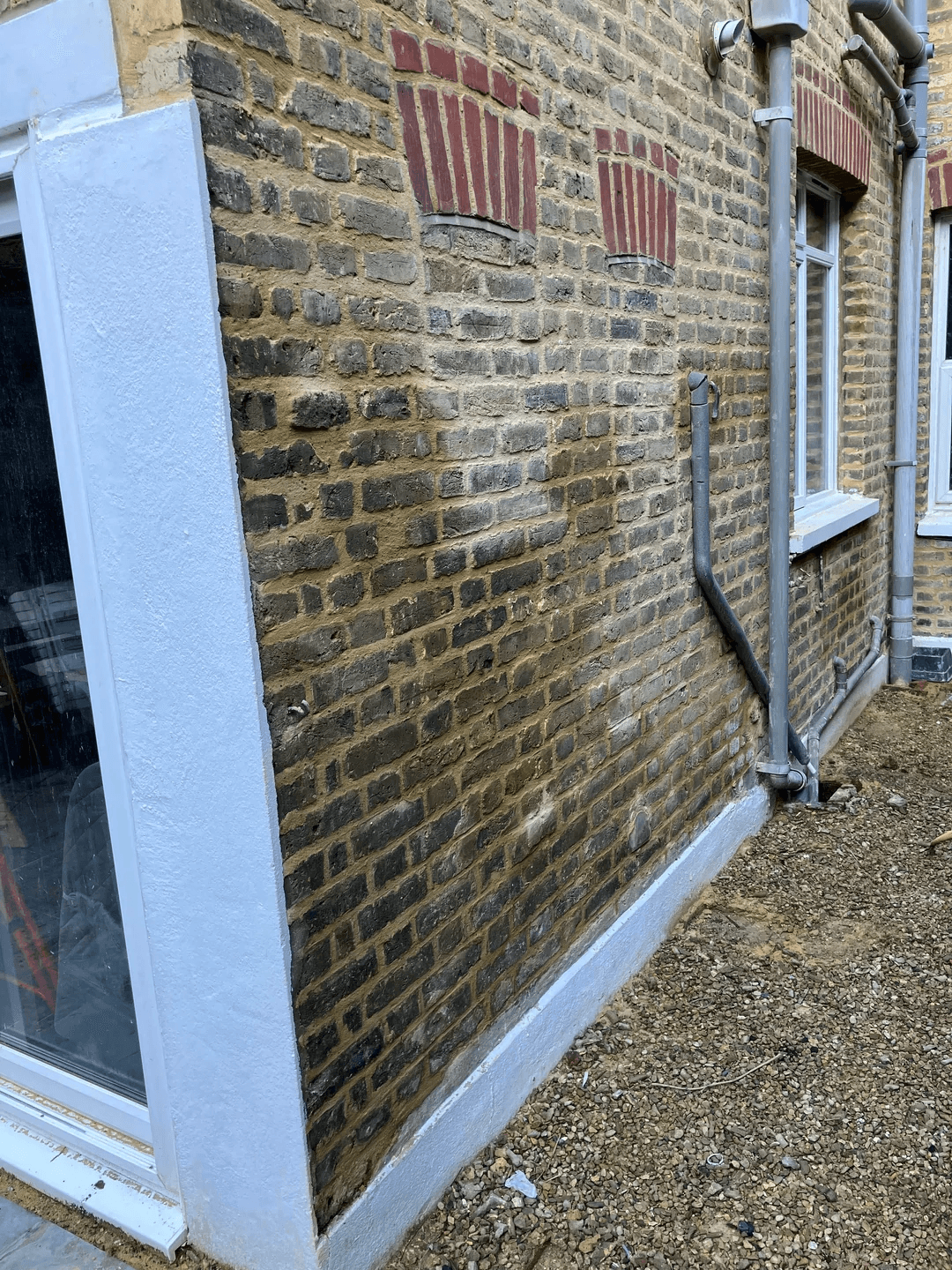
Example of damp satining of external wall (Source)

Leaning chimney stack
- Internal: musty smell, cold corners, uneven floors, damp staining, condensation on windows.

- Services: run taps, flush toilets, turn on heating (if you can). Slow drains or weak pressure might point to hidden plumbing issues.
- Neighbouring risks: overgrown trees, shared walls, unapproved extensions.
Ask the Seller:
- When was the roof, boiler or electrics last repaired?
- Are there warranties for double-glazed windows?
- Any historic planning or neighbour disputes?
- When was the house last renovated?
2. When to Commission a Survey
Book your HomeBuyer or Building Survey as soon as your offer is accepted and solicitors are instructed. Delaying until mortgage or search results arrive wastes weeks.
| Survey Type | Best For | Typical Cost** | Turnaround |
| Level 2 (HomeBuyer) | Modern flats, standard houses | £400–£700 | 3–7 days |
| Level 3 (Building Survey) | Victorian or altered homes | £700–£1,200 | 7–10 days |
** Excluding VAT. Actual cost depends on provider, size of property, location and property type.
Survey results help you price in defects, plan follow-up reports (damp, roof, structure) and decide whether to proceed before paying your 10 % deposit.
Related: Your Building Survey Found Damp— Now What?
3. Documents to Check Before Exchange of Contracts
Your solicitor will collect the legal pack, but you should understand what’s in it.
| Document | What to Confirm | Why It Matters |
| TA6 Property Information Form | Disputes, alterations, boundaries | Incomplete answers trigger enquiries. |
| TA10 Fixtures & Contents Form | Items included in sale | Prevents disputes later. |
| TA7 (Leasehold only) | Service charges, ground rent | Required for mortgage approval. |
| EPC + Certificates | EPC, FENSA, Gas Safe, EICR | Missing docs delay exchange. |
| Land Registry Title & Plan | Boundaries and access rights | Confirms what you’re buying. |
| Searches | Local, drainage, environmental | “Further action required” = extra time. |
| Mortgage Offer | Expiry date, conditions | Usually valid 3–6 months. |
| Insurance | Buildings cover from exchange | Lender requirement. |
Learn more here: Documents You Need to Complete a House Purchase
4. Review Survey & Search Findings
If your survey flags Category 3 issues:
- Get written specialist quotes.
- Use costs to renegotiate price or request contribution.
- Major structural work? Consider pausing purchase.
If searches show risk:
- Flood or contamination: obtain an insurance quote first.
- Planning notices: confirm no restrictions on future works.
5. Legal and Financial Steps Before You Exchange
Ask your solicitor to confirm all items below are complete and satisfactory:
- All searches and enquiries answered in writing.
- Certificates and guarantees supplied or indemnity agreed.
- Mortgage offer valid and lender conditions met.
- Deposit funds verified (usually 10%).
- Completion statement reviewed and approved.
- Buildings insurance arranged from exchange date.
- TR1 Transfer Deed checked and signed.
- Completion date agreed by both sides.
Read next: Steps to Complete a House Purchase in England
6. Final Checks Before Exchange of Contracts
- Re-inspect the property if possible: confirm fixtures match the TA10 list.
- Verify meter readings and key hand-over plan.
- Confirm your solicitor has prepared your Stamp Duty (SDLT1) form.
- Keep digital copies of every document — you’ll need them for resale or insurance.
7. Common Mistakes That Delay Exchange
| Mistake | Result | What you should do instead | |
| 1 | Waiting to order survey | Adds 2–4 weeks | Book immediately after offer accepted |
| 2 | Missing guarantees | Solicitor can’t exchange | Request early or buy indemnity policy |
| 3 | Mortgage offer expired | Full re-underwrite | Track expiry; ask lender for extension |
| 4 | Ignoring survey defects | Post-completion costs | Get quotes before exchange |
| 5 | No insurance in place | Lender blocks exchange | Activate policy before signing |
FAQ: Before Exchange of Contracts
Do I need insurance before exchange?
- Yes. Once you exchange, you’re legally responsible for the property even before completion. Lenders require proof of cover. The reason is (in an extreme case) even if the house collapses after exchange but before completion, the buyer is still legally obliged to complete the purchase and pay the full price
Can I pull out before exchange?
- Yes. Until exchange, neither party is legally bound. You may lose survey or legal fees, but not your deposit.
When should I book a homebuyer survey?
- Immediately after your offer is accepted — early booking shortens the overall timeline by several weeks.
External Resources
- RICS Home Surveys – Official Guide
- Law Society – Property Transaction Forms
- MoneyHelper – Buying a Home Checklist
What to Do Next
If you’re under time pressure or need specialist input
We can coordinate independent inspections and quotes so you can decide whether to proceed, renegotiate, or pause. Get in touch now.
We regularly help buyers at the pre-exchange stage, particularly with Victorian and Edwardian properties , where surveys flag damp, roof defects, movement, or missing certificates shortly before exchange.